Short answer: on a normal week-long trip you will almost certainly see giant tortoises, marine iguanas, sea lions, blue-footed boobies, frigatebirds, Darwin's finches, sea turtles and Sally Lightfoot crabs. Penguins, flamingos and land iguanas need the right island. Waved albatross, hammerheads and the red-lipped batfish need luck, a cruise or a dive boat.
Your bingo card
Bonus squares (big luck or a special trip): , , .
Your ticks stay in this browser only. Odds labels: common = seen on almost every trip; likely = needs the right island or tour; lucky = rare, seasonal or cruise/dive-only.
Wildlife map
Where and when to see each animal
| Animal | Odds | Where (best bets) | Best months | Status |
|---|---|---|---|---|
| Giant tortoise Chelonoidis porteri · endemic | common | El Chato Tortoise Reserve (highlands); Fausto Llerena Breeding Center / Charles Darwin Station | All year | Critically Endangered |
| Marine iguana Amblyrhynchus cristatus · endemic | common | Tintoreras islets (nesting); North Seymour coast | All year | Vulnerable |
| Galápagos sea lion Zalophus wollebaeki | common | Playa Baquerizo and La Lobería; North Seymour and Mosquera islet | All year | Endangered |
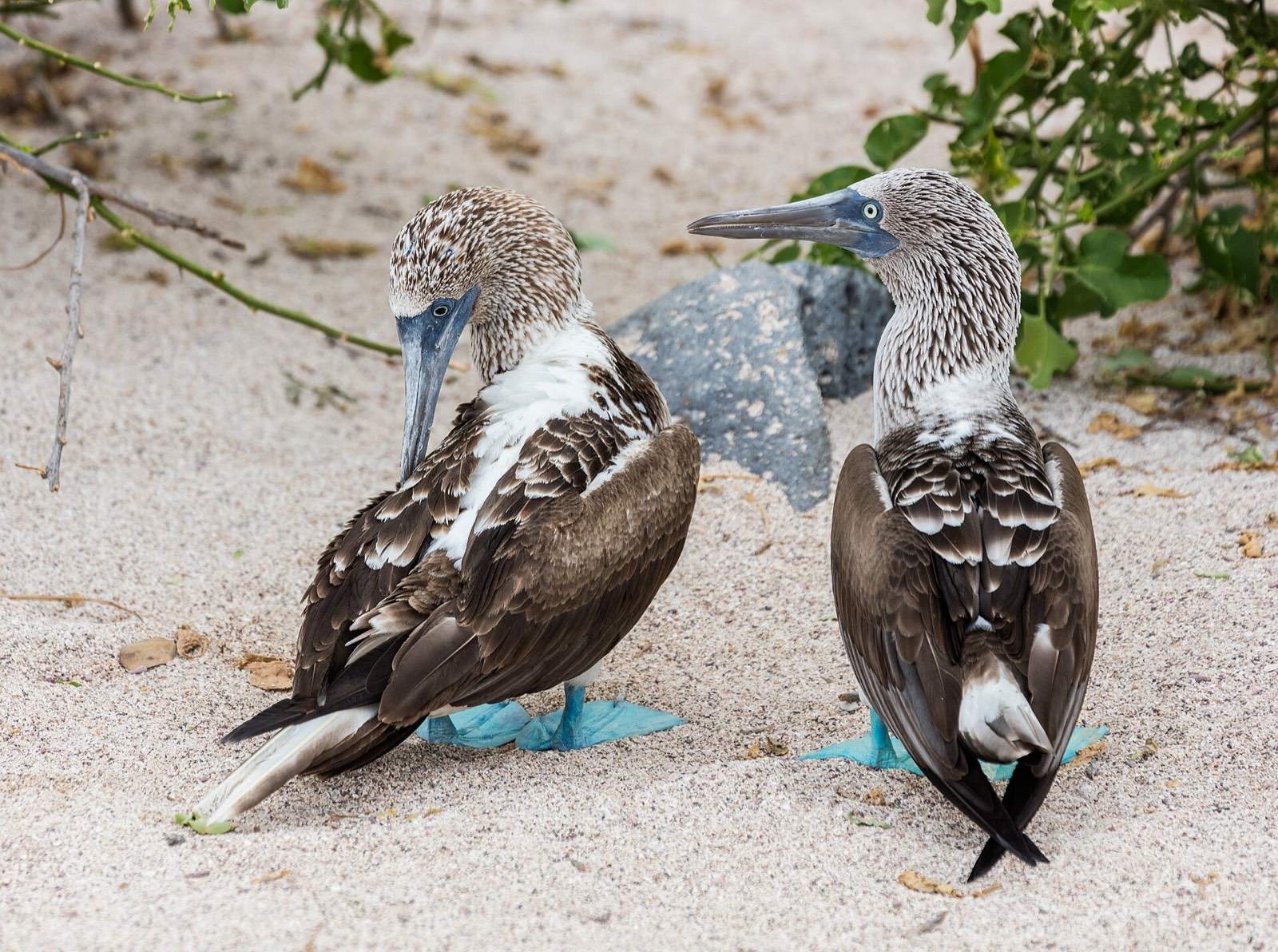
| Blue-footed booby Sula nebouxii | common | North Seymour (large colony); Cabo Rosa / Los Túneles | Apr–Oct | Least Concern |
| Magnificent frigatebird Fregata magnificens | common | Cerro Tijeretas / Frigatebird Hill (magnificent and great nest together); North Seymour (largest magnificent colony in Galápagos) | All year | Least Concern |
| Darwin's finches Geospiza, Camarhynchus, Certhidea, Platyspiza (about 18 species) · endemic | common | Charles Darwin Research Station and Puerto Ayora; Santa Cruz highlands and El Mirador | All year | Mostly Least Concern; mangrove finch Critically Endangered |
| Green sea turtle Chelonia mydas | common | Tintoreras; Las Bachas (major nesting site) | All year | Least Concern (global) |
| Sally Lightfoot crab Grapsus grapsus | common | Any lava shoreline | All year | – |
| Galápagos land iguana Conolophus subcristatus · endemic | likely | North Seymour (about 2,500 iguanas, introduced from Baltra); Dragon Hill (breeding and repatriation programme) | All year | Vulnerable |
| American (Galápagos) flamingo Phoenicopterus ruber | likely | Puerto Villamil lagoons; Punta Moreno lagoons | All year | Least Concern (global) |
| Whitetip reef shark Triaenodon obesus | likely | Las Tintoreras channel; Kicker Rock (León Dormido) | All year | Vulnerable |
| Red-footed booby Sula sula | lucky | Punta Pitt (only site with all three booby species nesting); Genovesa (over 200,000 birds) | All year | Least Concern |
| Galápagos penguin Spheniscus mendiculus · endemic | lucky | Bartolomé (small colony in cave behind Pinnacle Rock); Mariela Islets / Tagus Cove dinghy ride | May–Oct | Endangered |
| Flightless cormorant Nannopterum harrisi · endemic | lucky | Elizabeth Bay and Urbina Bay coast; Punta Espinoza | Apr–Oct | Vulnerable |
| Galápagos fur seal Arctocephalus galapagoensis · endemic | lucky | Puerto Egas grottoes (James Bay); Darwin Bay | Aug–Nov | Endangered |
| Waved albatross Phoebastria irrorata | lucky | Punta Suárez | Apr–Dec | Critically Endangered |
| Scalloped hammerhead shark Sphyrna lewini | lucky | Wolf and Darwin; Kicker Rock and Gordon Rocks | Jun–Dec | Critically Endangered |
| Red-lipped batfish Ogcocephalus darwini · endemic | lucky | Deeper sandy areas of the Bartolomé dive site | All year | Least Concern |
Giant tortoise Chelonoidis porteri
commonendemicCritically Endangered Wild animals roam the El Chato highlands and breeding centres in all three main towns have tortoises of all ages.
Did you know? Can survive up to a year without food or water by breaking down body fat, which produces water as a by-product. Size: Santa Cruz form: carapace to about 130 cm (Wikipedia). Galápagos tortoise complex: up to 417 kg, males typically 272-317 kg, lifespan over 100 years in the wild.
Where: El Chato Tortoise Reserve (highlands) (land-based (wild tortoises)); Fausto Llerena Breeding Center / Charles Darwin Station (land-based, 10-min walk from Puerto Ayora); Centro de Crianza Arnaldo Tupiza (land-based); Centro de Crianza David Rodríguez (CCTTDR) (land-based).
Marine iguana Amblyrhynchus cristatus
commonendemicVulnerable Lines every lava shore on the main islands; Dec-Mar breeding adds colour.
Did you know? Expels excess salt from nasal glands, described as 'much like sneezing'; can dive to 30 m, though most dives are under 5 m. Size: Snout-to-vent 12-56 cm; adult males up to 12 kg on southern Isabela, about 1 kg on Genovesa.
Where: Tintoreras islets (nesting) (day boat from Puerto Villamil); North Seymour coast (day tour from Santa Cruz); Punta Suárez (red and green colour all year) (cruise itineraries); Puerto Ayora harbour and Tortuga Bay shore (land-based).
Galápagos sea lion Zalophus wollebaeki
commonEndangered Hauled out on town docks, beaches and benches; pups present year-round.
Did you know? A mother can pinpoint her pup by voice from a crowd of 30 or more barking sea lions. Size: 1.5-2.5 m, 50-400 kg; bulls about 2 m and 360 kg.
Where: Playa Baquerizo and La Lobería (land-based walk from town); North Seymour and Mosquera islet (day tour from Santa Cruz); Puerto Ayora fish market and docks (land-based).
Blue-footed booby Sula nebouxii
commonLeast Concern North Seymour has a large colony and day tours almost always pass it; breeding is opportunistic so some pairs are nesting in most months.
Did you know? Foot colour comes from aligned collagen plus carotenoids from fresh fish, and fades within 48 hours of fasting, so bright feet signal a well-fed bird. Size: About 81 cm long, 1.5 kg on average; females to 90 cm, wingspan up to 1.5 m.
Where: North Seymour (large colony) (day tour from Santa Cruz); Cabo Rosa / Los Túneles (day boat from Puerto Villamil); Española and Isabela (chicks in October) (cruise or tour).
Magnificent frigatebird Fregata magnificens
commonLeast Concern Soars over harbours and has a trail-side colony on North Seymour; Frigatebird Hill is a short walk from San Cristóbal's town.
Did you know? A kleptoparasite: it pecks other seabirds into dropping their catch, then snatches the food in mid-air before it hits the water. Size: 89-114 cm long, wingspan 2.17-2.44 m, 1.1-1.59 kg.
Where: Cerro Tijeretas / Frigatebird Hill (magnificent and great nest together) (land-based walk from town); North Seymour (largest magnificent colony in Galápagos) (day tour from Santa Cruz).
Darwin's finches Geospiza, Camarhynchus, Certhidea, Platyspiza (about 18 species)
commonendemicMostly Least Concern; mangrove finch Critically Endangered Found in the arid zone and highlands on every inhabited island, often at your hotel breakfast.
Did you know? A hybrid male reached Daphne Major in 1981; its descendants are larger, use food others cannot, and no longer interbreed with the native finches. Size: 10-20 cm, 8-38 g; warbler-finches smallest, vegetarian finch largest.
Where: Charles Darwin Research Station and Puerto Ayora (land-based); Santa Cruz highlands and El Mirador (land-based).
Green sea turtle Chelonia mydas
commonLeast Concern (global) Seen on most snorkel stops; nesting beaches add Dec-Jun chances (nesting window disputed, see events).
Did you know? The name comes from the greenish fat under the shell, not the shell colour (olive to black). Size: Galápagos adults are smaller than the global average (carapace 78-112 cm, 68-190 kg); no Galápagos-specific figure read today.
Where: Tintoreras (day boat from Puerto Villamil); Las Bachas (major nesting site) (day tour or cruise); Quinta Playa (main nesting site for the population) (not a casual visitor site); Tortuga Bay and Concha de Perla (land-based).
Sally Lightfoot crab Grapsus grapsus
common Dark juveniles and red-brown adults crowd the rocks at almost every landing.
Did you know? Seen removing ticks from marine iguanas in an apparent cleaning symbiosis. Size: Carapace slightly longer than 8 cm.
Where: Any lava shoreline (land-based).
Galápagos land iguana Conolophus subcristatus
likelyendemicVulnerable North Seymour holds about 2,500 animals along the visitor trail, so a day tour there almost always delivers; Dragon Hill and South Plaza add chances.
Did you know? North Seymour's population of about 2,500 grew from roughly 70 iguanas moved there from Baltra in the early 1930s; cacti make up about four-fifths of the diet, spines included. Size: 0.9-1.5 m long, up to 13 kg.
Where: North Seymour (about 2,500 iguanas, introduced from Baltra) (day tour from Santa Cruz); Dragon Hill (breeding and repatriation programme) (visitor site; check whether day tours land here); South Plaza (day tour from Santa Cruz (operator sources)).
American (Galápagos) flamingo Phoenicopterus ruber
likelyLeast Concern (global) About 500 birds spread over a handful of lagoons; Villamil's lagoons are walkable but numbers move with water level and food.
Did you know? Galápagos flamingos are smaller than other American flamingos, show sexual dimorphism in body shape and lay smaller eggs. Size: Species stands 120-145 cm tall; Galápagos birds are significantly smaller (no figure read today).
Where: Puerto Villamil lagoons (land-based walk); Punta Moreno lagoons (cruise); Las Bachas lagoon and Garrapatero lagoon (day tour (Bachas) / land-based (Garrapatero)).
Whitetip reef shark Triaenodon obesus
likelyVulnerable Rests in groups in caves and channels by day, so Tintoreras and Kicker Rock usually deliver.
Did you know? Unlike many sharks it can pump water over its gills while resting, so it does not have to keep swimming. Size: Up to about 1.6 m; reported maximum weight about 18 kg.
Where: Las Tintoreras channel (day boat from Puerto Villamil, snorkel/walk); Kicker Rock (León Dormido) (day boat snorkel from Puerto Baquerizo Moreno).
Red-footed booby Sula sula
luckyLeast Concern On a land-based trip the only realistic chance is the Punta Pitt day tour from San Cristóbal; the big colonies are on cruise-only Genovesa.
Did you know? About 5% of Genovesa's red-footed boobies are white-morphed rather than brown. Size: About 70 cm long, wingspan up to 152 cm; the smallest booby.
Where: Punta Pitt (only site with all three booby species nesting) (boat day tour from Puerto Baquerizo Moreno (operator sources, secondary)); Genovesa (over 200,000 birds) (cruise only (no day-tour option known)).
Galápagos penguin Spheniscus mendiculus
luckyendemicEndangered About 95% live on Fernandina and western Isabela; population only about 1,200-1,800 (sources disagree), so Bartolomé is a gamble.
Did you know? Pants like a dog to cool off, and nests in lava tubes because sun-heated lava can get hot enough to boil an egg. Size: About 48-50 cm tall, 2-4 kg; second-smallest penguin species.
Where: Bartolomé (small colony in cave behind Pinnacle Rock) (day tour from Santa Cruz); Mariela Islets / Tagus Cove dinghy ride (cruise); Tintoreras and Los Túneles (day boat from Puerto Villamil).
Flightless cormorant Nannopterum harrisi
luckyendemicVulnerable Only Fernandina and the north and west coasts of Isabela; from Puerto Villamil there is a single operator-marketed tour.
Did you know? Its wings are about a third of the size a bird of its proportions would need to fly. Size: 89-100 cm long, 2.5-5.0 kg; males about 35% heavier than females.
Where: Elizabeth Bay and Urbina Bay coast (cruise); Punta Espinoza (cruise (operator source)); Playa Cormorán tour (land-based boat tour from Puerto Villamil, marketed as the only one (operator claim)).
Galápagos fur seal Arctocephalus galapagoensis
luckyendemicEndangered Hides in shaded grottoes and crevices, mostly in the north and west; few land-based tours reach their haunts.
Did you know? The smallest of all eared seals. Size: Males about 1.5 m and 64 kg; females about 1.25 m and 27 kg.
Where: Puerto Egas grottoes (James Bay) (cruise (operator sources)); Darwin Bay (cruise); West coast (cruise).
Waved albatross Phoebastria irrorata
luckyCritically Endangered Cruise-only, and only present on Española from about April to December.
Did you know? A pair's courtship dance can last five days, with stumbling, honking and beak-fencing. Size: 80-90 cm long, wingspan 220-250 cm.
Where: Punta Suárez (cruise itineraries; no day-tour option confirmed by any source read today).
Scalloped hammerhead shark Sphyrna lewini
luckyCritically Endangered Reliable schools are at Darwin and Wolf only (liveaboards); day-trip sightings are occasional.
Did you know? CDF study: hammerhead biomass about 5 t/ha in the warm season (March) versus 21 t/ha in the cold season (August). Size: Males mature at about 1.5-1.8 m, females reach about 2.5 m; maximum recorded 4.3 m.
Where: Wolf and Darwin (liveaboard dive cruise only); Kicker Rock and Gordon Rocks (day boat snorkel or dive; sightings occasional (no source read today)).
Red-lipped batfish Ogcocephalus darwini
luckyendemicLeast Concern Lives at 3-76 m on sand, so snorkellers rarely see it; mostly a diver's find.
Did you know? It walks along the seabed on its pectoral, pelvic and anal fins with a gait like a frog's, and has bright, almost fluorescent red lips. Size: Up to 40 cm.
Where: Deeper sandy areas of the Bartolomé dive site (dive site (needs a diver)).
Tours that go where the animals are
North Seymour: Day Tour with Wildlife Walk & Snorkeling
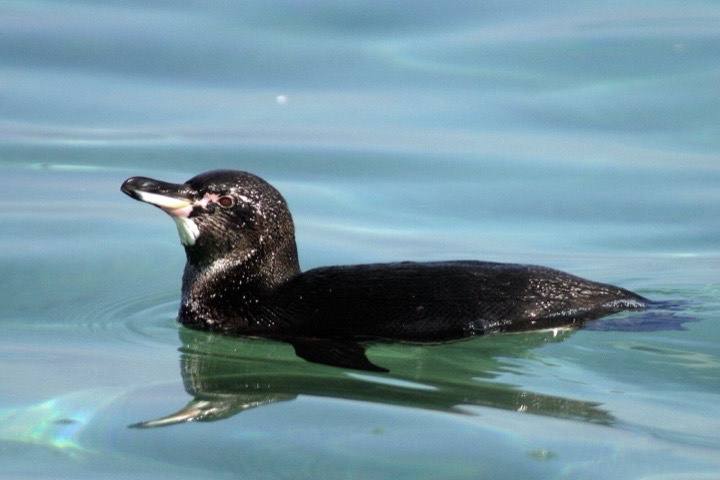
Tintoreras Islet: Penguins & Blue-Footed Boobies
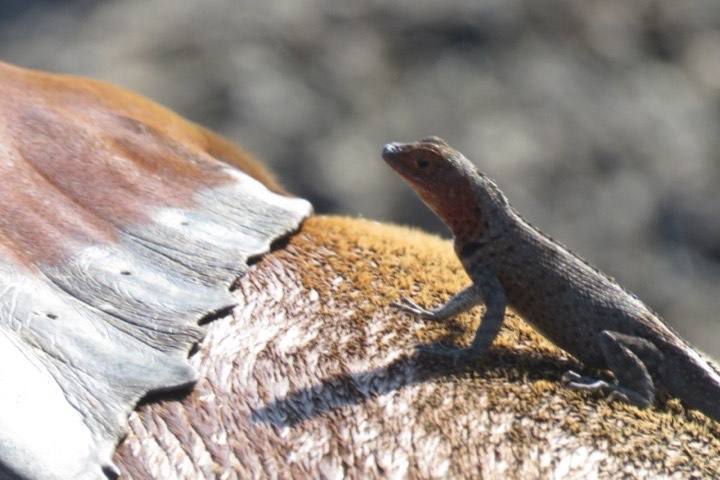
Los Túneles: Snorkel with Sharks, Seahorses & Sea Turtles
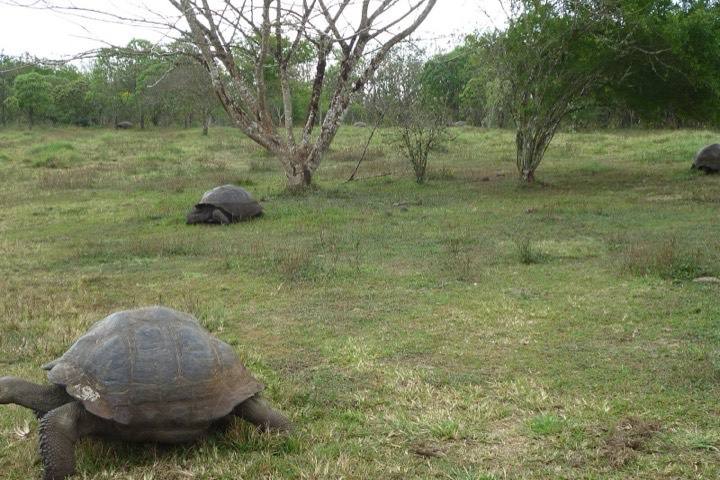
Giant Tortoises, Lava Tunnels & Craters Tour
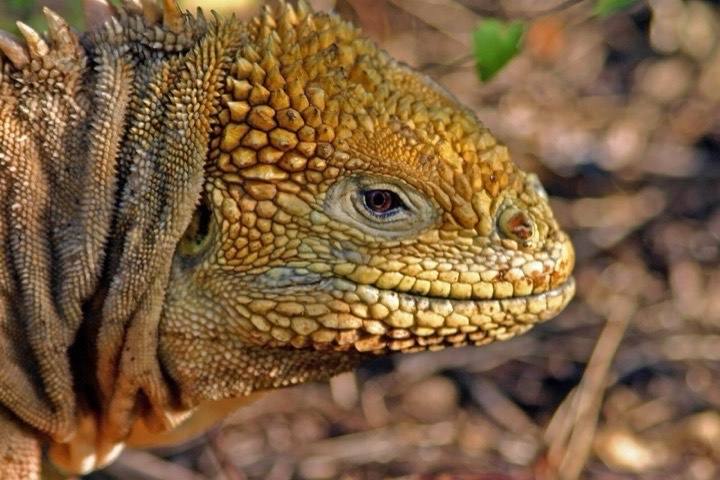
Santa Fe Island Snorkeling Day Tour
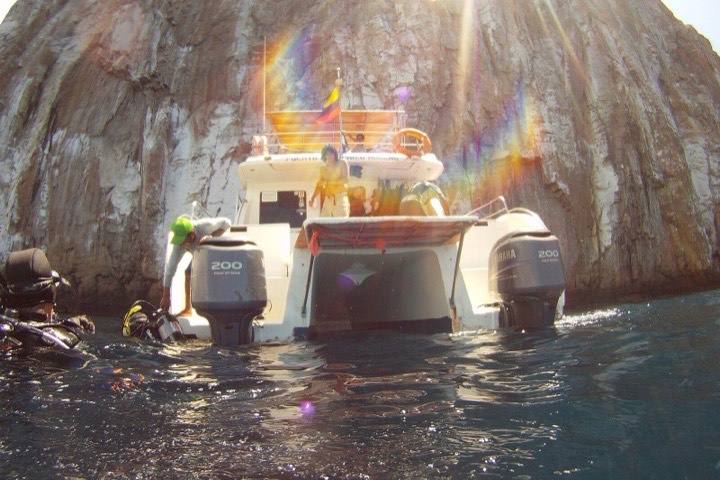
Kicker Rock & Beach Full-Day Tour
All Galápagos tours on GetYourGuide →
Prices and ratings as listed in November 2026; the price at checkout is what counts. We may earn a commission at no extra cost to you. Disclosure
Which animals are around in your travel month: the month-by-month guide. The rules for getting close (2 metres, no flash, no touching): visitor rules.
Sources (38)· checked 2026-11-06
- agris.fao.org
- audubon.org
- darwinfoundation.org
- darwinfoundation.org
- darwinfoundation.org
- datazone.darwinfoundation.org
- datazone.darwinfoundation.org
- datazone.darwinfoundation.org
- datazone.darwinfoundation.org
- en.wikipedia.org
- en.wikipedia.org
- en.wikipedia.org
- en.wikipedia.org
- en.wikipedia.org
- en.wikipedia.org
- en.wikipedia.org
- en.wikipedia.org
- en.wikipedia.org
- en.wikipedia.org
- en.wikipedia.org
- en.wikipedia.org
- en.wikipedia.org
- en.wikipedia.org
- en.wikipedia.org
- en.wikipedia.org
- en.wikipedia.org
- en.wikipedia.org
- en.wikipedia.org
- galapagos.gob.ec
- galapagos.org
- galapagos.org
- galapagos.org
- galapagos.org
- galapagos.org
- galapagos.org
- galapagos.org
- galapagosconservation.org.uk
- galapagoslocaltours.wetravel.com
Updated 2026-11-06. Fees, boat times and prices change, so confirm with the operator before you travel.